

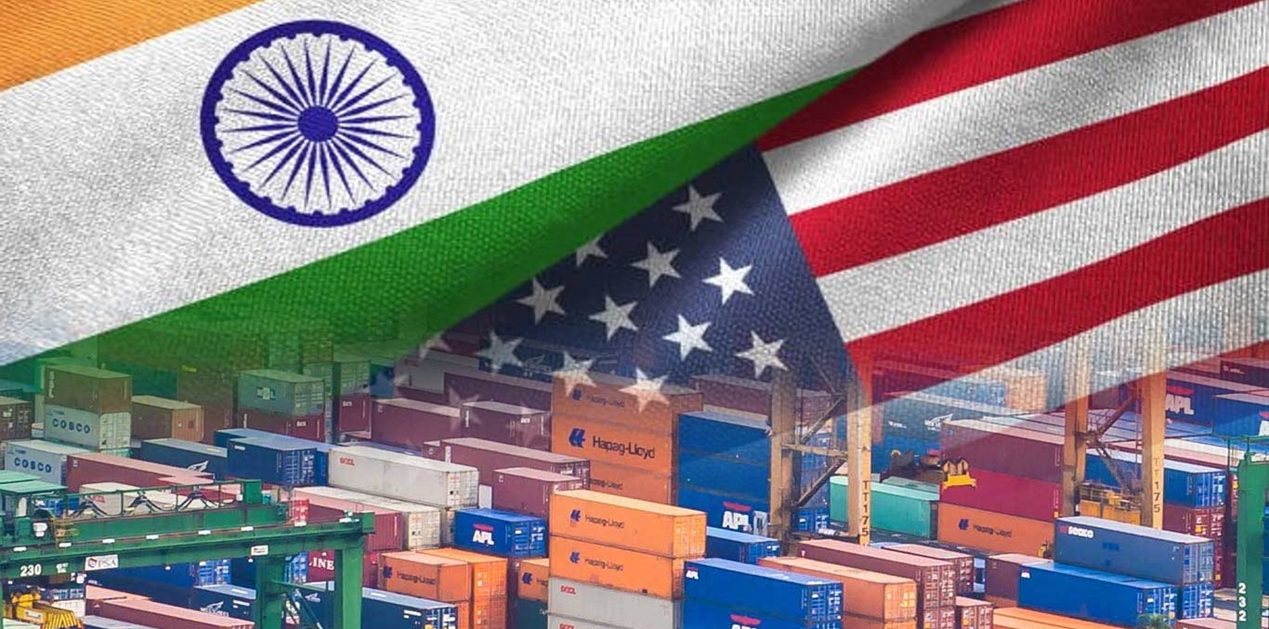
As India and the US negotiate a bilateral trade agreement, India has already slashed its import tariffs on American bourbon whiskey from 150% to 100%. This massive duty reduction is transforming the Indian bourbon market by dramatically lowering consumer prices, expanding brand availability, and intensifying competition with domestic distillers.
India is the biggest whisky-drinking nation in the world. Roughly 230 million cases are consumed here annually, accounting for nearly half of global whiskey sales, according to the International Wine and Spirits Research, the global authority on beverage alcohol data.
But US-made bourbon brands, such as Maker’s Mark, have long remained a niche product in India, where whiskey drinkers have traditionally preferred Scotch and domestic brands.
In 2024, India imported just $8.8 million (€8.1 million) worth of US-produced whiskey, a relative drop in the barrel for India.
But that could finally be changing. For years, a 150% import tariff meant bourbon was prohibitively expensive in India, limiting both availability and consumer reach.
Recent US-India trade talks reduced that duty to 100%, significantly improving the economics of selling US whiskey in the world’s largest whiskey market.
United States (DISCUS) President and CEO Chris Swonger, said, “America’s spirits industry is a powerful economic engine,” said Swonger, noting that the sector generates more than $250 billion in economic activity, supports approximately 1.7 million U.S. jobs and sources more than 2.7 billion pounds of grains from American farmers. “But the U.S. spirits and hospitality sectors are facing significant economic headwinds. A slowdown in the spirits market, combined with ongoing trade frictions, has started to result in year-over-year job losses at U.S. distilleries.”
Swonger shared with the committee recent statistics underscoring the hardships facing the U.S spirits and hospitality sectors. He stated that domestic spirits sales declined 2.2% in 2025, the first decline in decades; exports fell nearly 4%; and U.S. distilleries lost 3.5% of their workforce, nearly 1,000 jobs from September 2024 to September 2025. He also pointed out that restaurants and bars, which are critical to local economies and employment, continue to face rising costs and closures.
“In this environment, tariffs on imported spirits place additional strain on the sector,” said Swonger. “Alcohol sales are particularly consequential for restaurant profitability, accounting for 21% of the total revenue for full-service restaurants. This underscores the outsized role these products play in sustaining the broader hospitality sector.”
Swonger emphasized that the U.S. spirits trade deficit is driven by consumer choice, not unfair trade practices, and raised concern that tariffs on spirits are likely to trigger retaliation that disproportionately harms American distillers and hospitality workers.
He pointed out that when the European Union imposed retaliatory tariffs on American Whiskey from 2018 to 2021, U.S. exports fell 20%, before rebounding 60% after the tariffs were suspended. More recently, retaliatory bans in Canada led to a 63% decline in U.S. spirits exports to that market in 2025.
“Even the threat of tariffs creates uncertainty, negatively impacting exports,” Swonger said, noting that the EU’s suspension of planned retaliatory tariffs on U.S. spirits, set to expire in August 2026, had contributed to a 3% decline in U.S. spirits exports to the EU.
Swonger highlighted the unique nature of the global spirits marketplace, where certain products, including Scotch Whisky, Cognac, Irish Whisky and Tequila, are geographically distinctive products that cannot be produced in the United States. In return, the U.S. has secured recognition of Bourbon and Tennessee Whiskey as distinctive products in 45 countries, helping protect the authenticity, quality and consumer trust in these iconic American spirits.
For the first time in years, western distilleries are cutting back production, a signal that domestic demand might finally be slowing. At the same time, rising global tensions and renewed tariff wars have prompted unexpected conversations: about access, about trade deals, and about diversification away from volatile partners.
On 21 April, the Wall Street Journal reported that the US and India are exploring a bilateral trade deal. The UK has long lobbied for lower Scotch tariffs. India’s own import duties on American whiskey dropped from 150% to 100% in February — a small but significant shift.
It’s worth considering what that could mean. India already consumes more whisky than any other country — by a wide margin. Its top-selling brand, McDowell’s No.1, outsells Johnnie Walker by over 40%. And nearly all of that volume is domestic.
But the landscape is shifting. India’s middle class is growing rapidly, with more disposable income and a growing taste for premium products. Distribution networks from Diageo, Pernod Ricard and Allied Blenders are already in place. If Scotch and American whiskey brands can slot into those channels, even modest market share could translate into massive gains.
There’s still a long way to go. But in a world where traditional whisky markets are slowing, and producers are sitting on excess stock, India may no longer be the distant prospect it once was.
Sazerac’s impact on the Indian market centers on premiumizing Indian spirits and introducing American Bourbons to a new generation. By leveraging its 60% controlling stake in John Distilleries (makers of Paul John), the US liquor giant is expanding distribution, lowering price barriers, and diversifying portfolios. Sazerac has introduced premium American labels like Weller to Indian metros (Mumbai, Delhi, Goa, and Karnataka) to tap into changing, adventurous consumer palates. The company has pushed into ready-to-drink (RTD) beverages like BuzzBallz and flavored whiskeys like Fireball to capture younger, urban demographics.
Currently in India thet offer Benchmark Bourbon, Buffalo Trace Bourbon and the recently launched Weller lineup of Weller Special Reserve and Weller 12-Year-Old. In the coming years they expect to continue to introduce Indian whiskey fans to even more of Buffalo Trace Distillery’s award-winning portfolio to meet the market’s increasing demand for luxury spirits and authentic storytelling.
Weller 12-Year-Old Bourbon, aged for over 12 years, offers a smooth, rich experience with notes of almond, creamed corn, and vanilla, best enjoyed neat or on the rocks. Priced at ₹5,400 in Haryana and ₹7,750 in Mumbai, it is India’s oldest age-stated bourbon.
Weller Special Reserve Bourbon features a smooth profile with flavors of honey, butterscotch, and soft wood, complemented by a sweet honeysuckle finish. Versatile for sipping or mixing, it’s priced at ₹2,500 in Haryana and ₹4,500 in Mumbai.
Sazerac’s continued investments in John Distilleries highlight its strategy to scale local distribution while exploring further acquisitions to solidify its footprint in the world’s largest spirits market. Following a reduction in India’s import duties on Bourbon, Sazerac is positioned to be more competitive in the fast-growing luxury segment.
John Distilleries is open to selling more, and potentially all, of its founder’s remaining stake to U.S. spirits group Sazerac, following an earlier round valuing the Indian liquor maker at about 40 billion rupees ($426.48 million), its founder said.
Sazerac, home of brands such as Corazon tequila and Svedka vodka, already holds about 60% of the privately held liquor maker after buying stakes including from Gaja Capital nearly a decade ago.
There is no timeline, but the parties have agreed in principle to jointly explore changes in shareholding, John said, adding any sale of his remaining stake would likely be at a higher valuation than the most recent transaction.
Sazerac, which has been expanding globally, emerged as a bidder for Jack Daniel’s maker Brown-Forman earlier this month, underscoring its appetite for growth through acquisitions.
India is on course to become the world’s largest spirits market by volume by 2032, overtaking China, with 15 million to 20 million new consumers entering the market each year, according to alcohol industry data provider IWSR.
For John Distilleries, Profitability has lagged revenue growth due to investments in premium brands and thin margins in high‑volume budget segments, but John said the company expects to turn profitable by fiscal 2028.
For distillers from Kentucky, the US state that lays claim to being the home of bourbon, the timing couldn’t be better.
After years of aggressive expansion, the industry is under growing pressure. According to the Kentucky Distillers’ Association, warehouses across the state now hold a record 16.1 million barrels of ageing bourbon, more than three times the inventory seen during a whiskey glut of 1985.
The assessed value of those barrels reached $10 billion (€9.2 billion) in 2025, carrying a tax burden of roughly $75 million.
Bourbon sales in the US fell nearly 8% last year, particularly among younger consumers who are increasingly shifting toward tequila, hard seltzers and non-alcoholic alternatives.
Inflation, changing drinking habits, cannabis use and even the rise of weight loss drugs have all hit consumption.
‘Sober bars’ on the rise as US alcohol consumption falls
The Wall Street Journal recently reported that Kentucky, which produces about 95% of the world’s bourbon, is now sitting on roughly a decade’s supply.
“We spent years making whiskey for drinkers who never showed up” was one veteran distiller’s summary of the crisis.
Against that backdrop, India’s whiskey drinkers are suddenly far more relevant than they once were.
“If the pricing works and the story resonates, this could become much bigger than a small export play.”
India presents almost the opposite picture of the US market: young, expanding and increasingly focused on premium spirits.
Beverage alcohol sales in India rose by 7% in the first half of 2025, according to data from the Confederation of Indian Alcoholic Beverage Companies (CIABC), with urban consumers steadily trading up to imported and premium brands.
Industry executives say younger drinkers in cities such as Mumbai, Delhi and Bengaluru are increasingly experimenting beyond traditional blends, gravitating toward Japanese whisky, craft gin, tequila and premium Indian single malts.
Bourbon makers are now positioning to capitalize on that evolving landscape, where consumers are more willing to experiment with unfamiliar styles.
For bourbon makers, the opportunity is not about capturing India’s mass whiskey market overnight. It is about establishing credibility within the country’s fast-growing premium sector.
Bourbon, with its sweeter, corn-heavy profile and strong vanilla oak notes, remains unfamiliar to many Indian drinkers raised on lighter, grain-forward profiles.
“India’s young drinkers are curious, globally exposed and increasingly open to American styles,” Luthra said. “If bourbon comes with authenticity, competitive pricing and a willingness to build the category rather than just sell into it, the Indian consumer will respond enthusiastically.”
The numbers reveal how bourbon is still only at the start of its quest to conquer the Indian market. Bourbon and Tennessee whiskey together currently sell fewer than 300,000 cases annually in India, compared with roughly 8.5 to 9 million cases for Scotch.
Sazerac, which has been expanding globally, emerged as a bidder for Jack Daniel’s maker Brown-Forman (BFb.N), opens new tab earlier this month, underscoring its appetite for growth through acquisitions. The company did not immediately respond to a request for comment.
India is on course to become the world’s largest spirits market by volume by 2032, overtaking China, with 15 million to 20 million new consumers entering the market each year, according to alcohol industry data provider IWSR.
John Distilleries’ revenue rose 20% to 94.5 billion rupees in the year ended March 2025, according to private market data provider Tracxn, broadly in line with the company’s growth rate over the past five years, a pace its founder said it expects to maintain.
The Sazerac Company, one of the world’s largest distilled spirits companies, has major plans for India. The company which has got some fine distilleries across the globe, including in Goa, India, continues to expand its business across continents. To know their rich history and strong distilling capabilities, one can visit Buffalo Trace Distillery in Kentucky, United States; at Domaine Sazerac de Segonzac in Cognac, France; and at Paul John Distillery in Goa, India. Sazerac has additional impressive locations in New Orleans, Montréal, London, Cork and Sydney, to name a few. Sazerac, a family-owned company with nearly 400 years of history, is striving hard to bring the finest spirits to consumers and communities around the world. With renewed interest in Bourbon whiskey in India and Sazerac’s plans, Diego Bianchi, General Manager of Emerging Markets & Barrel Select at Sazerac hopes to change the numbers for American Whiskey in India.
Vincent Fernandes


Leave A Comment